IEA still expecting coal demand to fall by 2030 despite record 2025 demand

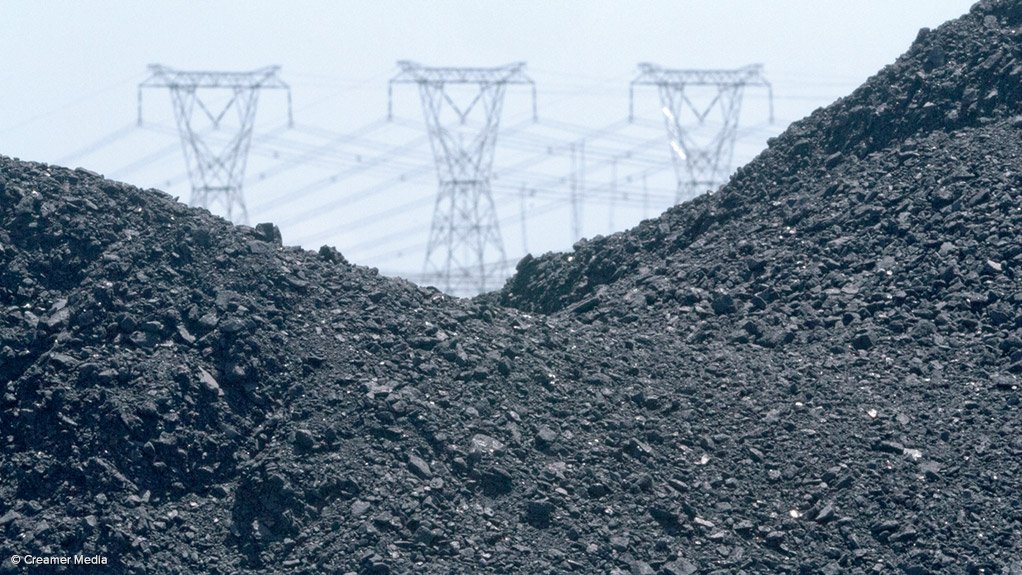


Global coal demand is on course to rise by 0.5% in 2025, reaching a record 8.85-billion tonnes, the ‘Coal 2025’ report published by the International Energy Agency (IEA) shows.
Nevertheless, the IEA is still forecasting that demand will fall by 2030, largely owing to shifts in the electricity sector, which currently accounts for two-thirds of total coal consumption.
“With renewable capacity surging, nuclear expanding steadily and a huge wave of liquefied natural gas coming to market, coal-fired power generation is forecast to decline from 2026 onward,” the report states.
However, coal demand from industry is expected to remain more resilient.
The largest absolute increase in coal consumption to 2030 is expected to take place in India, where demand is set to rise by 3% a year on average, leading to an overall increase of over 200-million tonnes.
This, despite a fall in demand in 2025 in India, where an early and intense monsoon season resulted in a decline in coal use for only the third time in 50 years. The fall was partly offset by a rise in consumption in the US, where demand has been falling for 15 years, supported by higher natural gas prices and policy measures that slowed coal plant retirements.
The fastest growth is forecast for Southeast Asia, however, where demand is set to increase by over 4% a year to 2030.
In China, which currently accounts for more than half of global coal use, demand is expected to fall slightly by the end of the decade, amid a rapid deployment of renewable-energy capacity and a government goal for domestic coal consumption to peak by 2030.
China reduced imports in 2025 owing to oversupply and sluggish demand, a trend that is expected to continue to 2030, leading to a reduction in coal trade worldwide.
As a result, the IEA sees coal output declining in most major producer countries through 2030, including a slight fall in South African output.
Production in South Africa is estimated at 234-million tonnes for 2025, which was almost stable compared with 2024.
However, improved rail performance could add up to ten-million tonnes of export capacity over the next three years, the report states.
South African coal production is projected to be 228-million tonnes in 2030, as logistics reforms partly offset the structural decline in investment.
Article Enquiry
Email Article
Save Article
Feedback
To advertise email advertising@creamermedia.co.za or click here
Research Reports



Latest Multimedia


Showroom

The Steel Tube Export Association of South Africa was established to develop sustainable, internationally competitive carbon steel tube and pipe...
VISIT SHOWROOM
Supplier & Distributor of the Widest Range of Accurate & Easy-to-Use Alcohol Breathalysers
VISIT SHOWROOM



Announcements
What's On
Subscribe to improve your user experience...
Option 1 (equivalent of R125 a month):
Receive a weekly copy of Creamer Media's Engineering News & Mining Weekly magazine
(print copy for those in South Africa and e-magazine for those outside of South Africa)
Receive daily email newsletters
Access to full search results
Access archive of magazine back copies
Access to Projects in Progress
Access to ONE Research Report of your choice in PDF format
Option 2 (equivalent of R375 a month):
All benefits from Option 1
PLUS
Access to Creamer Media's Research Channel Africa for ALL Research Reports, in PDF format, on various industrial and mining sectors
including Electricity; Water; Energy Transition; Hydrogen; Roads, Rail and Ports; Coal; Gold; Platinum; Battery Metals; etc.
Already a subscriber?
Forgotten your password?
Receive weekly copy of Creamer Media's Engineering News & Mining Weekly magazine (print copy for those in South Africa and e-magazine for those outside of South Africa)
➕
Recieve daily email newsletters
➕
Access to full search results
➕
Access archive of magazine back copies
➕
Access to Projects in Progress
➕
Access to ONE Research Report of your choice in PDF format
RESEARCH CHANNEL AFRICA
R4500 (equivalent of R375 a month)
SUBSCRIBEAll benefits from Option 1
➕
Access to Creamer Media's Research Channel Africa for ALL Research Reports on various industrial and mining sectors, in PDF format, including on:
Electricity
➕
Water
➕
Energy Transition
➕
Hydrogen
➕
Roads, Rail and Ports
➕
Coal
➕
Gold
➕
Platinum
➕
Battery Metals
➕
etc.
Receive all benefits from Option 1 or Option 2 delivered to numerous people at your company
➕
Multiple User names and Passwords for simultaneous log-ins
➕
Intranet integration access to all in your organisation